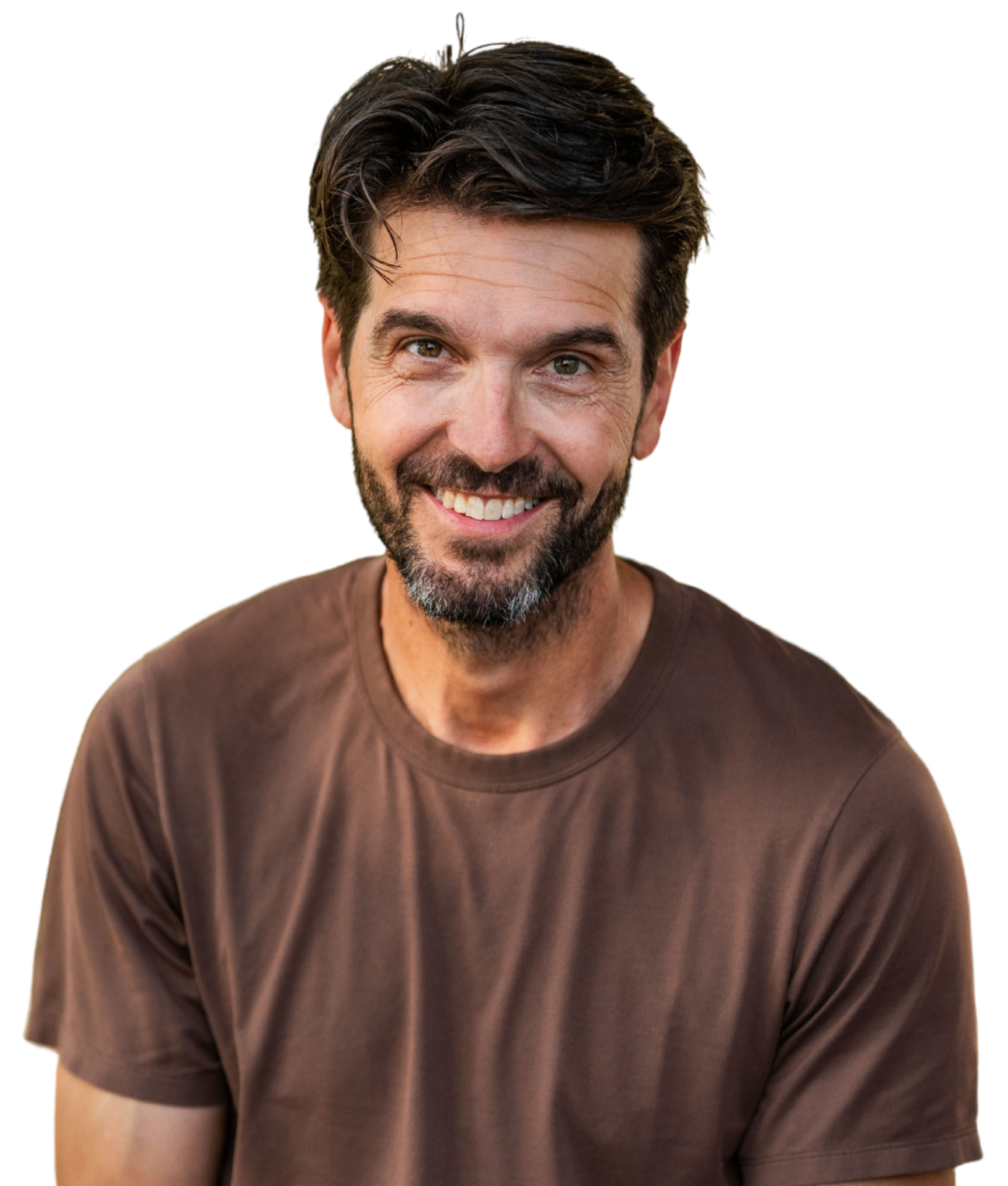
The thread
I pulled.
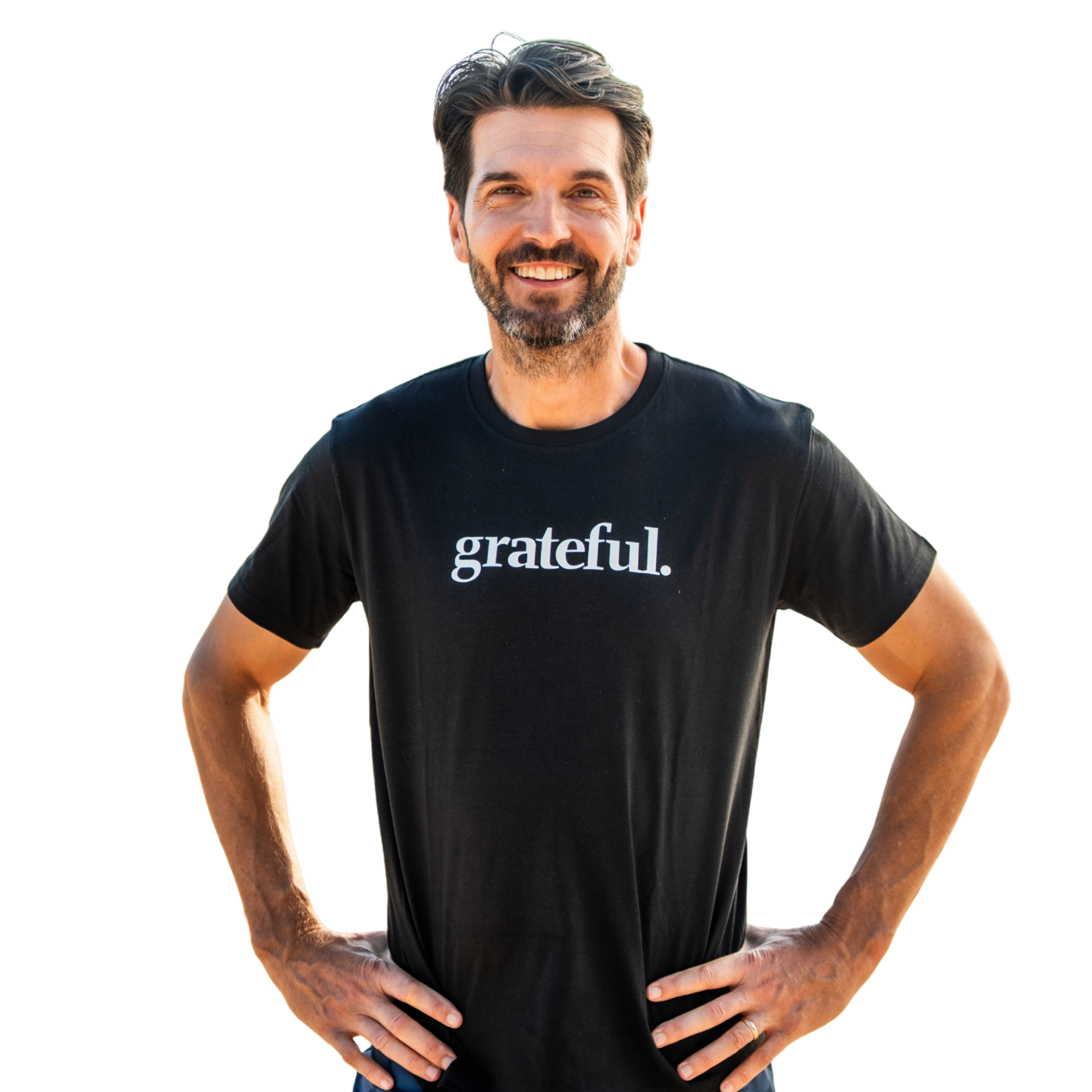
I grew up in the church. The pursuit of something true led me into ministry – a role I took seriously enough to start asking questions that pulled the whole thing apart. Belief came apart. So did a seventeen-year marriage. Depression sat on me for a long stretch. What came back was quieter, more grounded, more expansive than what it replaced.
That rebuild ran alongside twenty-five years of digital and creative agency work. Building brands, telling stories, asking what meaningful output actually looks like. Working with Awake, I kept finding myself in the same room: men figuring out who they were becoming, leaders mid-transition, founders between versions of themselves. Curious? began in the accumulated weight of watching what happens when people are finally given permission to ask the questions underneath the questions.
The thread I pulled was a simple one, in retrospect: what does it actually mean to be a spiritual leader? From the inside of the institution, the answer kept coming back smaller than the question deserved. The more honestly I asked it, the less the role I was in could hold.
What followed was years of unlearning. I had to take apart the belief systems I had built my identity around. There was nothing graceful about it. I lost the marriage I had been in for seventeen years. I lost the certainty I had used as a compass. For a stretch, I lost myself — a depression that didn't lift on schedule and didn't respond to the things that were supposed to fix it.
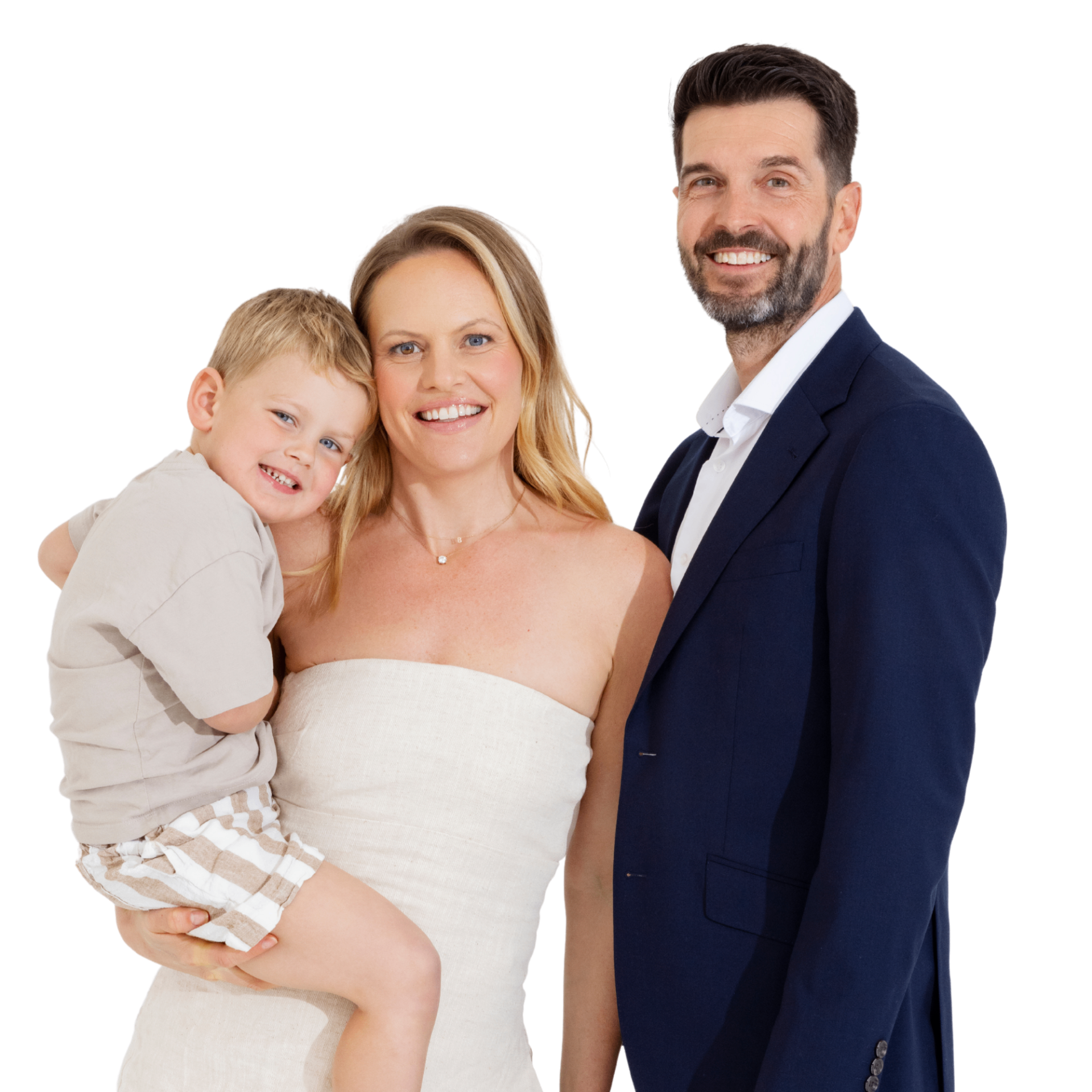
The way back wasn't a crisis-to-clarity arc. It was slower than that, and less cinematic. I started doing small things again. Walking. Writing. Paying attention to what my body was telling me. I rebuilt a relationship with something larger than myself that didn't require me to defend it to anyone. I met Tess. We built a family. I started a new kind of work.
What I have now is not the spirituality I left, and it's not its opposite either. It's something more honest, more embodied, less interested in being right. It's the ground I stand on when I work with other men on the same terrain — and there are more of us than the culture lets on.
If you're somewhere in the middle of your own version of that: it does pass. What's on the other side is yours to claim.